Frequently asked questions
Get help with generator answers in the Greater Bay area
How long does a typical generator installation take?
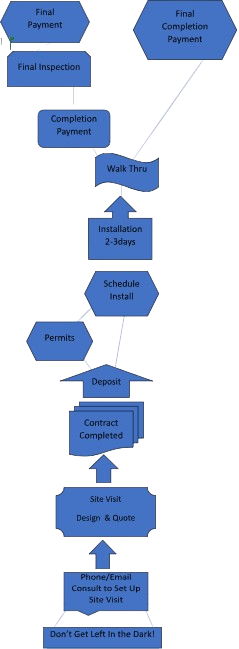
A turn-key generator installation typically takes one to three days, depending on site preparation needs and electrical setup complexity. This includes concrete pad placement, gas line or propane connection, transfer switch installation, and full system testing. At My Generator Guy, we provide compliance verification and personalized documentation binders for every installation in Pittsburg and throughout the Bay Area.What's included in a generator maintenance service?
Comprehensive generator maintenance includes oil changes, battery checks, filter replacements, monthly test runs, and annual inspections to ensure reliable performance. Regular maintenance prevents costly repairs and extends equipment lifespan. My Generator Guy offers service agreements that cover these essential tasks and keep your backup power system ready when you need it most.Why won't my generator start when the power goes out?
Generators fail to start due to dead batteries, stale fuel, faulty transfer switches, or low oil levels that trigger safety shutoffs. Regular maintenance and test runs prevent most startup failures. At My Generator Guy, we provide 24-hour emergency repair services in Pittsburg to diagnose and fix starting issues quickly during power outages.How often should I test my backup generator?
Backup generators should run under load for at least 30 minutes monthly to prevent fuel system issues and ensure battery charge. Regular testing identifies potential problems before emergencies occur. My Generator Guy includes monthly test runs in our maintenance agreements and offers remote monitoring services to track system performance automatically.Can a generator work with solar panels?
Yes, generators can integrate with solar systems to provide backup power when solar production is insufficient or during nighttime outages. Proper integration requires compatible equipment and professional electrical setup to ensure safe, seamless operation. My Generator Guy specializes in solar system integration services that connect renewable energy with reliable backup generator solutions throughout the Bay Area.What size generator do I need for my home?
Generator sizing depends on your home's square footage, essential appliances, heating and cooling systems, and total electrical load during outages. Most homes require 10kW to 22kW generators for whole-house coverage. At My Generator Guy, we conduct electrical assessments and recommend properly sized Generac generators for your specific needs in Pittsburg and surrounding communities.What does unusual generator noise usually mean?
Unusual noises like knocking, grinding, or rattling indicate loose components, low oil levels, worn bearings, or engine damage that requires immediate attention. Ignoring strange sounds can lead to complete system failure. My Generator Guy's technicians diagnose and repair mechanical issues with 24-hour emergency availability to prevent further damage.Do generators need special permits in California?
Yes, generator installations in California require electrical permits and must meet building codes for placement, fuel connections, and transfer switch wiring. Local jurisdictions also enforce noise ordinances and setback requirements. My Generator Guy handles all compliance verification and permitting as part of our turn-key installation process throughout Pittsburg and the Greater Bay Area.How does remote generator monitoring work?
Remote monitoring uses 24-hour LTE connectivity to track generator status, run time, maintenance needs, and system alerts in real time. This service enables proactive maintenance and priority scheduling during power outages. At My Generator Guy, our monitoring services ensure your generator remains reliable and receives immediate attention when issues arise in the Bay Area.What's the difference between air-cooled and liquid-cooled generators?
Air-cooled generators use fans for cooling, cost less, and work well for smaller homes, while liquid-cooled models use radiator systems, run quieter, last longer, and support larger electrical loads. Liquid-cooled units are ideal for whole-house applications and commercial use. My Generator Guy recommends the appropriate cooling system based on your power requirements and budget during our consultation process.Can a generator power an EV charging station?
Yes, properly sized generators can power Level 1 and Level 2 EV charging stations during outages, though charging speed may be slower depending on generator capacity. Integration requires compatible electrical setups and load management. My Generator Guy installs both EV chargers and backup generators with coordinated electrical systems for homes and businesses throughout Pittsburg.What causes a generator to produce no electricity?
Generators that run but produce no power typically have failed voltage regulators, tripped circuit breakers, damaged capacitors, or faulty stator windings. Electrical component failure requires professional diagnosis and repair. At My Generator Guy, our technicians use diagnostic equipment to identify electrical faults and restore power generation with 24-hour emergency service availability in the Bay Area.What's included in a turn-key generator installation?
Turn-key installations cover site preparation, electrical setup, transfer switch installation, full system testing, and compliance verification. Every component gets integrated so the generator starts automatically during outages. You'll have a tested, code-compliant system ready for the next power failure.How does 24-hour LTE monitoring work for generators?
LTE monitoring tracks generator status, run time, maintenance needs, and system health in real time without relying on your internet connection. Alerts notify you of issues immediately, even during grid outages. This catches problems like failed test runs or low battery voltage before the next outage happens.What causes a generator to fail during a power outage?
Startup failures during outages typically stem from dead batteries, stale fuel, or sensors that haven't been tested recently. Generators that sit idle for months develop issues that only appear when the transfer switch calls for power. Monthly test runs and battery checks catch these failures before you're left without backup power.Why do generators in Pittsburg need monthly test runs?
California's mild climate means generators can sit idle for extended periods, allowing fuel to degrade and batteries to lose charge. Monthly test runs circulate oil, verify the transfer switch responds correctly, and confirm the battery holds adequate voltage. This prevents the most common startup failure during actual outages.What's the difference between generator maintenance and load testing?
Maintenance includes oil changes, battery checks, and filter replacements to keep the engine healthy. Load testing puts the generator under actual operating conditions to verify it can handle your home's full power demand. Many generators pass idle tests but fail when asked to power air conditioning and appliances simultaneously.Can you integrate solar panels with a backup generator?
Hybrid systems combine solar with backup generators to provide power during grid outages, since standard solar systems shut down when the grid fails. The generator supplements solar during low-sunlight periods or high-demand situations. This setup maintains power 24/7 during extended outages without relying solely on fuel.What electrical upgrades are needed for generator installation?
Most installations require a transfer switch that routes generator power to your home's circuits and may need panel upgrades if your existing service can't accommodate the switching equipment. Older panels often lack the capacity or proper grounding for automatic transfer switches. Code compliance verification ensures the system meets California electrical requirements.When should you call for emergency generator repair?
Contact emergency service immediately if your generator won't start during an active outage, makes unusual grinding or knocking noises, or produces power but can't sustain loads. Troubleshooting during outages focuses on getting temporary power restored quickly, then diagnosing underlying issues once the grid returns.What does a generator transfer switch actually do?
Transfer switches detect grid power loss and signal the generator to start, then safely route generator power to selected circuits while isolating your home from the utility grid. This isolation prevents backfeeding, which can electrocute utility workers. Automatic switches handle the entire process without manual intervention during outages.How do you know if your generator can handle your home's power needs?
Load testing runs the generator under actual demand by powering your air conditioning, refrigerator, lights, and other essential loads simultaneously. If voltage drops or the engine struggles, the generator lacks capacity for your needs. Testing reveals this before an extended outage forces you to choose between critical systems.What permits are required for generator installation in California?
California installations require electrical permits and building code compliance verification, with specific requirements varying by jurisdiction. Permit coordination ensures the transfer switch, fuel connections, and setback distances meet local codes. Inspections verify proper grounding, ventilation clearances, and automatic shutdown features before the system goes live.Does installing an EV charger require a panel upgrade?
EV chargers draw significant continuous load, often requiring dedicated 40-60 amp circuits that many existing panels can't support without upgrades. Older 100-amp services frequently lack capacity for both household loads and Level 2 charging. Panel upgrades provide adequate amperage and circuit slots for safe, code-compliant charger installation.